Real arguments. Hidden flaws. Sharper thinking.

Bad Arguments
Are Everywhere.
Can You Spot Them?

Every day, people try to convince you of something. In advertisements, social media posts, political speeches, and everyday conversations.

Some arguments sound convincing, even when the reasoning behind them doesn't hold up.

Think you can tell the difference?

Investigate Your First Case

No experience necessary. Just bring your curiosity.

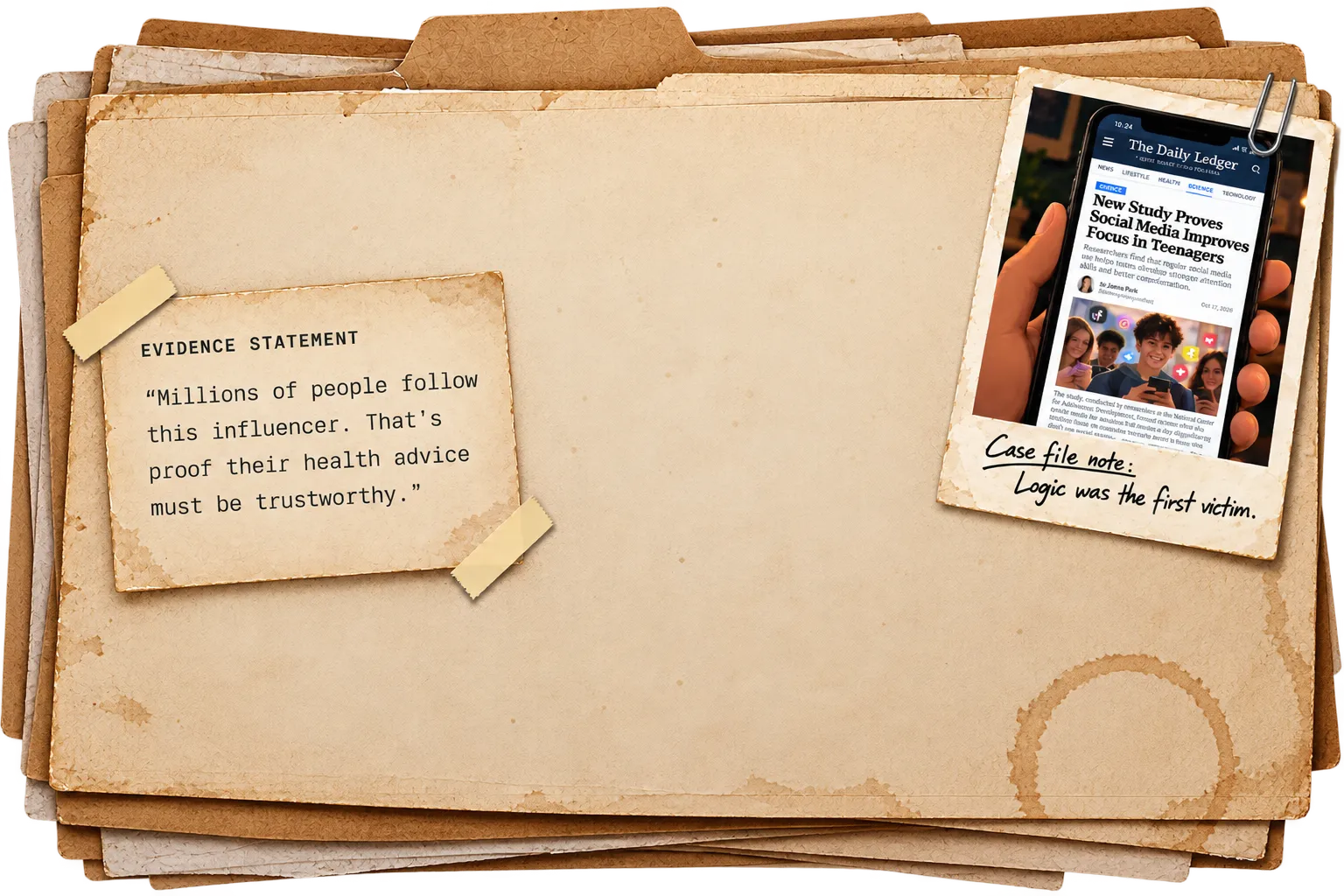
An aged case folder holding a taped evidence card that reads: Evidence statement. Millions of people follow this influencer. That's proof their health advice must be trustworthy. A Polaroid clipped to the folder shows a hand holding a phone with a fictional headline claiming a study proves social media improves focus in teenagers.

Sample case · 001

Can You Crack This Case?

Here's an argument. What's the problem with the reasoning?

Evidence statement“Millions of people follow this influencer. That's proof their health advice must be trustworthy.”
Select the best answer:

What's a logical fallacy?

Sometimes an argument sounds right. Until you look closer.

A logical fallacy is a mistake in reasoning that can make a weak argument seem convincing.

Fallacies can appear in everyday conversations, news stories, advertisements, and more. They often sound reasonable, but they rely on faulty reasoning instead of sufficient evidence.

Explore Common Fallacies

Another example

“Our school should start later. Other schools do it, so it must be a good idea.”

This is the
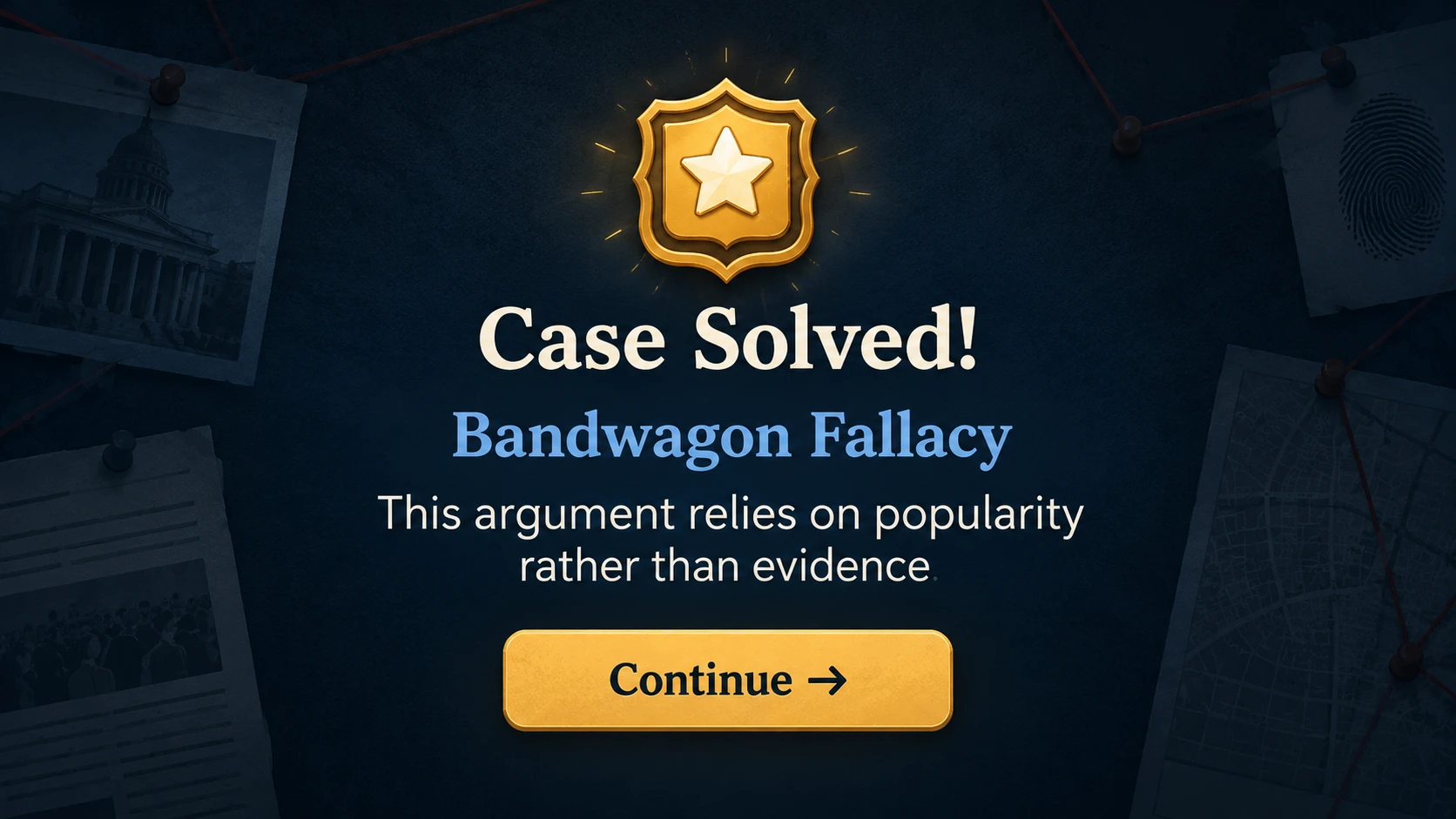
Bandwagon Fallacy.

Just because other schools do something doesn't automatically make it the best choice. Popularity alone doesn't prove an idea is right.

Why it matters

Your Best Defense Against Bad Arguments? Better Thinking.

Every day, you're surrounded by people trying to influence what you believe, buy, share, or support. Learning to recognize logical fallacies can help you:

  • Question what you see online

    Look beyond viral posts, catchy headlines, and confident claims.

  • Recognize misleading persuasion

    Examine the reasoning behind advertisements, debates, and public arguments.

  • Make stronger arguments

    Defend your ideas with evidence and reasoning rather than assumptions.

  • Challenge your own thinking

    Catch reasoning mistakes in your own beliefs, not only other people's.

How it works

Think Like a Detective. Question Like a Philosopher.

In Fallacy Files, you'll investigate arguments, uncover questionable reasoning, and learn to recognize the tricks that make bad arguments sound believable. Every case challenges you to look beneath the surface.

  1. Examine the evidence

    Read the argument and look for clues.

    A detective character presents an argument about building a new stadium, with an evidence card and case notes below.
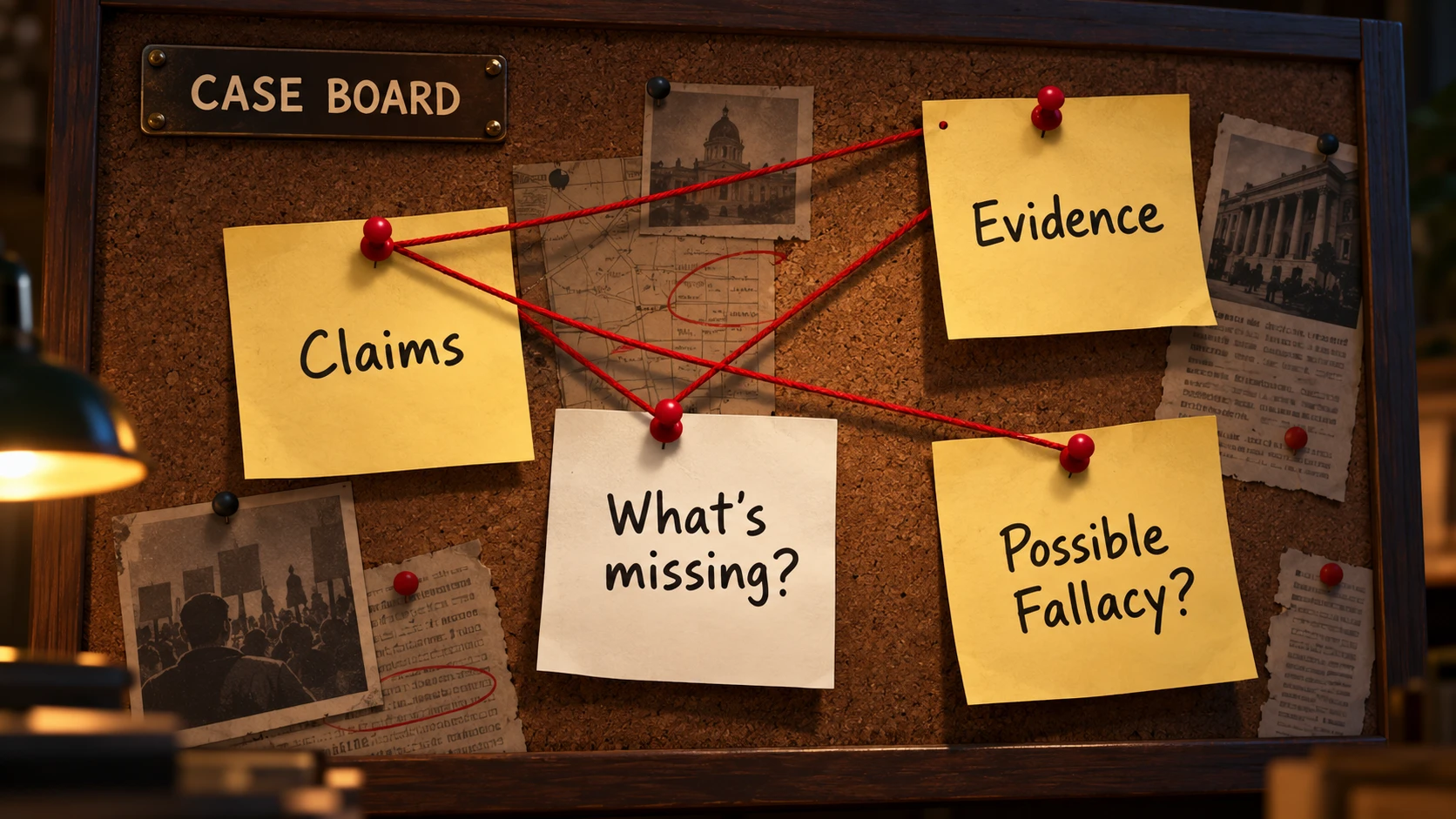
  2. Find the flaw

    Identify where the reasoning breaks down.

    A cork case board with notes labeled Claims, Evidence, What's missing, and Possible Fallacy, connected by red string.
  3. Sharpen your skills

    Learn from each case and build your expertise.

    A Case Solved screen with a detective badge naming the Bandwagon Fallacy.

The Evidence Is Right in Front of You.
Will You See What Others Miss?

You don't need to be an expert in logic. You just need to be willing to question what seems obvious.

Open Your First Case

Every great detective starts somewhere.

For educators and families

Built for classrooms and homes.

Every case file is free for classroom use. There are no student names, no student email addresses, and no student accounts. Progress stays on the student's own device.

In development: animated investigations. Watch a short argument unfold, study the evidence, then explain the flaw. Every scene will come with captions and a full transcript. Join the list to hear when they launch.

Get updates

Leave your email to hear about new case files and classroom features.

We only use your email to tell you about Fallacy Files. No sharing, no selling. Privacy notice